
Cat skiing vs heli skiing
A cat day with us costs $720 CAD in early and spring weeks and $850 in deep season. Heli skiing here is an add-on day on top of a cat day, at $1,150 or $1,400 more. The cats run in storms. The helicopter flies only when the pilot says the weather allows, and when it can't, the add-on is refunded in full.
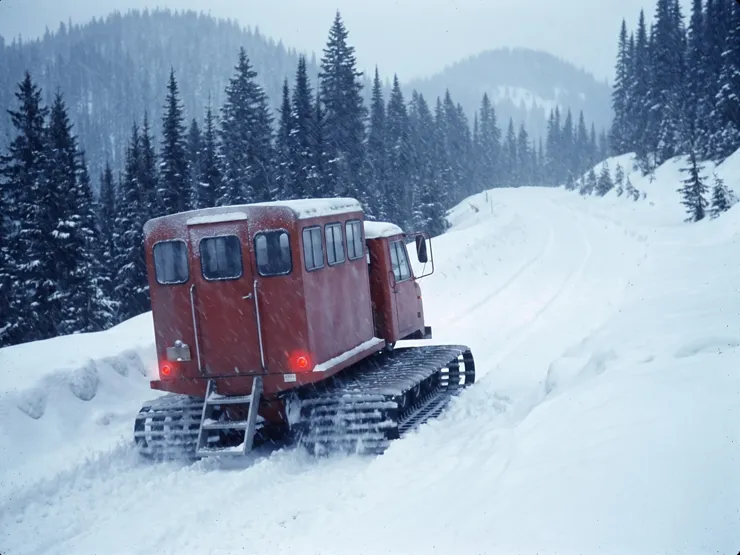
Juniper: Cat Two, the steady group. 10 guests, 2 guides.
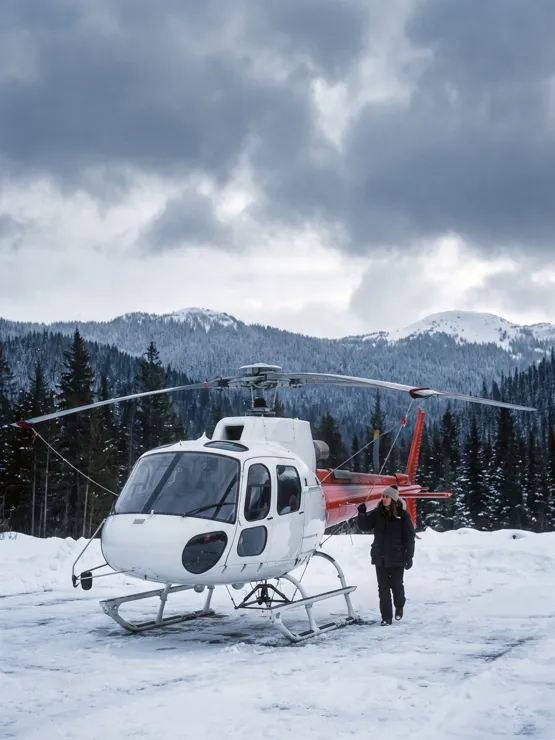
The A-Star: four guests and a guide each load, up to eight heli guests on a flying day.
- The helicopter couldn't flyYour heli add-on is refunded in full to your card. You ski the cat day.
- The cat day stopped under 4 runsHalf the day comes back to you.
- The cat day stopped at 4 to 6 runsA quarter of the day comes back to you.
- The cat day stopped at 7 runs or moreThat counts as a full day.
- The cats couldn't run at allYou choose: the whole day as credit, or 60% of it back in cash.
What each one costs
Every heli day starts as a cat day, which is why we price the helicopter as an add-on. If it can't fly, you still ski in the cat.
| Per guest, a day | Early and spring | Deep season |
|---|---|---|
| Day cat | $720 | $850 |
| Heli add-on day | +$1,150 | +$1,400 |
| Cat day with heli | $1,870 | $2,250 |
Vertical on each
A cat day is counted in runs. Our three groups ski 8 to 10, 10 to 12 or 12 to 14 runs a day, by pace. The cat carries you back up in a warm cab while you rest.
A heli day is counted in metres. We aim for 4,500 to 6,000 m and guarantee 4,000 m. If a day comes in short, you get $150 in cash for every 1,000 m under.
Weather is where they split
Storm days are the best cat days. The snow is deep and cold, the trees give the flat light some shape, and the cat runs regardless.
The helicopter needs visibility to fly and land, and Marta Eriksen, our pilot, makes that call every morning. Her call is final. The cats run nearly every day of the winter. The A-Star flies fewer, on the days the weather gives a window.
The feel of the day
A cat day is social. You ride in a warm cab with the same small group between every run, talking, drying out and eating lunch on the move. If the talk between runs is part of the day you want, pick the cat.
A heli day is sharper and quieter. The A-Star takes four guests and a guide each load, up to eight heli guests on a flying day. The flights are short and loud, and you spend more of the day skiing and less of it sitting.
Who should pick which
Read these and one will sound like your kind of day.
- Pick the cat if budget matters, if you want to ski whatever the weather does, or if you like a warm cab between laps.
- Pick a heli day if reach is the point and you're comfortable with a day that might not fly.
- Do both: a cat week with a heli add-on on the best-forecast day. Cat One weeks suit it best.