
Who reads the snow first
Every morning at 5:45 our guides meet, read the snow and set the run list. Dev Tarrant runs the meeting.

The guides
Ren Marchant
Owner and lead guide. Leads Cat One, the fast group.Dev Tarrant
Snow safety lead. Runs the 5:45 meeting and guides Cat Two.Aino Rautio
Lead guide for Cat Three, the first-week group.Marta Eriksen
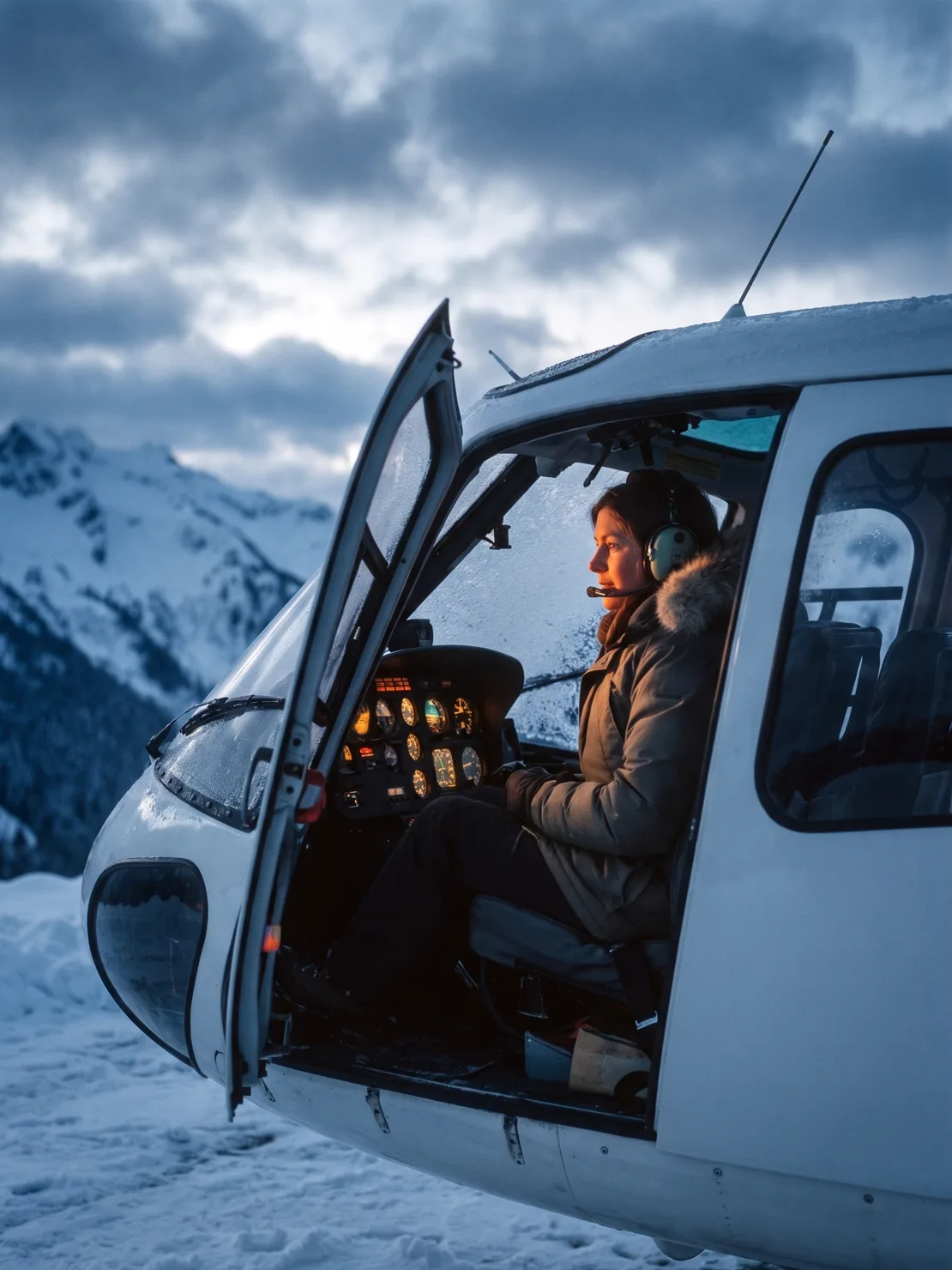
Pilot. Flies the A-Star.
Each of our guides holds current professional mountain guide certification. It is re-examined every season.
Down through the snowpack
Dev digs the study pit beside the lodge before the meeting and reads it top to bottom. The new snow sits on Tuesday night's, and a thin crust from the late-January warm spell decides which slopes open first.
The bars show how hard each layer is. Dev pushes a fist, a finger, a pencil or a knife into the wall, and the harder the snow, the smaller the thing that goes in. A hard layer under soft snow is what the guides watch.
The new storm snow, last 24 hours
0 to 40 cm · Soft (a fist goes in)
Light, cold, bonding to itself. Reading now
Tuesday night's snow, wind-pressed on the ridges
40 to 55 cm · Firm (one finger goes in)
The first laps go where the wind did not load it.
A thin crust from the late-January warm spell
55 to 57 cm · Very hard (only a knife goes in)
Tracked by hand in the pit.
The settled base, built since December
57 to 260 cm · Hard (only a pencil goes in)
Deep and strong across the basin.
The 5:45 meeting sheet
This is an example sheet. Print it, or send it to someone at home.
- Meeting
- 05:45
- Read first
- New snow, the base at the study plot, the lodge and the Horn temperatures, the wind
- Cat Three
- blue square Juniper Treesblue square Lantern Gladesblue square Creekbed
- Cat Two
- blue square Bellwetherblack diamond The Long Spoonblue square Lantern Gladesblack diamond Second Breakfast
- Cat One
- black diamond First Callblack diamond Whiteroom Directblue square Bellwetherblack diamond The Long Spoon
- Radio check
- done
How a day runs
- Guides' meeting: snow report, the board, the run list, radio check05:45
- Breakfast06:30
- Guest briefing07:30
- First cat rolls08:00
- Lunch in the cab or the warming hut12:30
- Last pickup at the creek road16:00
- Dinner at the long table19:00
Day one adds beacon practice, where you learn the avalanche transceiver you carry all week, and a confirmation run. On it the guides check that everyone is in the right cat.
For whoever worries about you
If someone you love is coming to ski with us, this part is for you. Every morning starts at 5:45 with the guides reading the new snow, the wind and the temperatures. They choose the day's runs from what they read.
Every guest carries an avalanche transceiver, a probe, a shovel and an airbag pack, and practises with them on day one. Each cat goes out with two guides who hold current professional certification, and the 5:45 meeting closes with a radio check.
We manage avalanche risk every morning, and we can't remove it. If you'd like to learn how avalanche risk works, these two public sources teach it well.